Marymount's History
From Camp Happy Hollow (1939) to Camp Marymount today—85+ years of faith, friendship, and outdoor tradition in Tennessee.
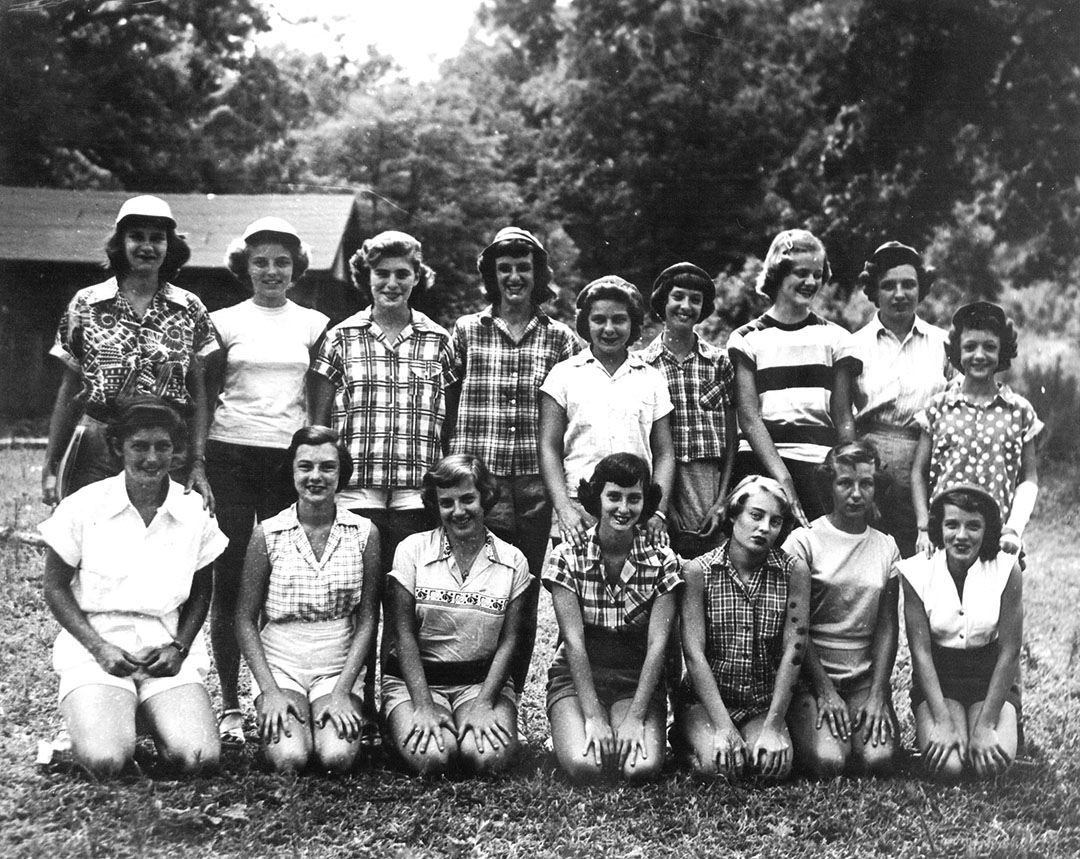
1939: Camp roots begin as Camp Happy Hollow in Joelton, Tennessee.
Fall 1945: Monsignor George Rohling purchases a fishing camp in Fairview to expand the diocesan summer camp.
1946: Camp opens at the current Fairview location.
1946 (opening campus): A small lodge, an infirmary, nine cabins, and an outdoor chapel.
1948: Senior camp is added to better serve older campers.
1951: St. Anthony’s Chapel is dedicated.
2008: Major renovations and additions expand year-round use, new dining hall, offices, meeting rooms, and winterized staff cabins; a new chapel is added.
Today: Camp Marymount continues as a place where faith, community, and outdoor tradition come together for campers and guests year-round.
Today: Independent 501(c)(3) nonprofit on 350 acres, serving campers from many states/countries
What you’ll still hear from Marymounters:
"Camp is a place where friendships form quickly and last a lifetime."
"Traditions matter—songs, campfires, cabin life, and shared responsibility."
"The experience is bigger than any one summer; it becomes part of a family’s story."
The Early Years: Camp Happy Hollow (1939)
Camp Marymount’s roots reach back to 1939, when the story began as Camp Happy Hollow in Joelton, Tennessee, a small Catholic residential camp owned by the Diocese of Nashville.
Even then, the heart of the experience was simple and enduring: time outdoors, shared routines, and the kind of community that forms when you live, play, and pray together.
A New Home in Fairview (1945–1946)
In the fall of 1945, the late Monsignor George Rohling purchased a fishing camp in Fairview, Tennessee, believing it would be an ideal place for the diocese to expand its summer camp.
When Camp Marymount opened at its current location in 1946, the campus was modest by design: a small lodge, an infirmary, nine cabins, and an outdoor chapel.
That simplicity became part of Marymount’s identity. The camp did not need “fancy” features to create a meaningful experience; what mattered most was the shared life—campfires, crafts, songs, and the steady rhythm of days shaped by nature and community.
Building a Tradition (1948–1951)
As the camp grew, it adapted to serve more campers and age groups. Senior camp was added in 1948, creating space for older campers to experience Marymount in a way that matched their stage of life.
In 1951, St. Anthony’s Chapel was dedicated—an important marker of Marymount’s faith heritage and a reminder that spiritual formation has always been woven into camp life.
Decades of Continuity
For more than 50 years, Marymount’s buildings remained nearly unchanged. That continuity is part of what many families love about the camp: the sense that the experience is timeless. Across decades, campers have continued to form bonds through the same kinds of moments—late-night conversations, shared responsibility, and the joy of being fully present.
Marymount has also been known for a camp culture where everyone is on a level playing field. When you arrive, you’re new together—learning names, learning routines, learning how to belong. The result is a community that forms quickly and often lasts for life.
A Turning Point: Year-Round Expansion (2008)
In 2008, Camp Marymount entered a new chapter with major renovations and additions. A new dining hall, offices, meeting rooms, and winterized staff cabins were added, allowing the camp to operate year-round by hosting retreats and special events. A new chapel was also added.
This expansion made it possible for more people—not only summer campers—to experience Marymount’s setting and spirit throughout every season.
The People Who Carry Marymount Forward
Camp Marymount’s history is not only dates and buildings; it is the people who return, remember, and rebuild.
Share your Marymount history. If you have a photo, a decade you attended, or a favorite tradition, we’d love to collect and preserve Marymount stories.
Share Your Tradition
Help us tell the Marymount story.
Have a tradition you remember—campfire songs, a place on property, a closing-day ritual, a counselor tradition, or a cabin legacy? We’d love to include it.
Important links


© 2026 Camp Marymount - All Rights Reserved.